 AI FactScan
Are you sure every image in your mind is something you actually saw?
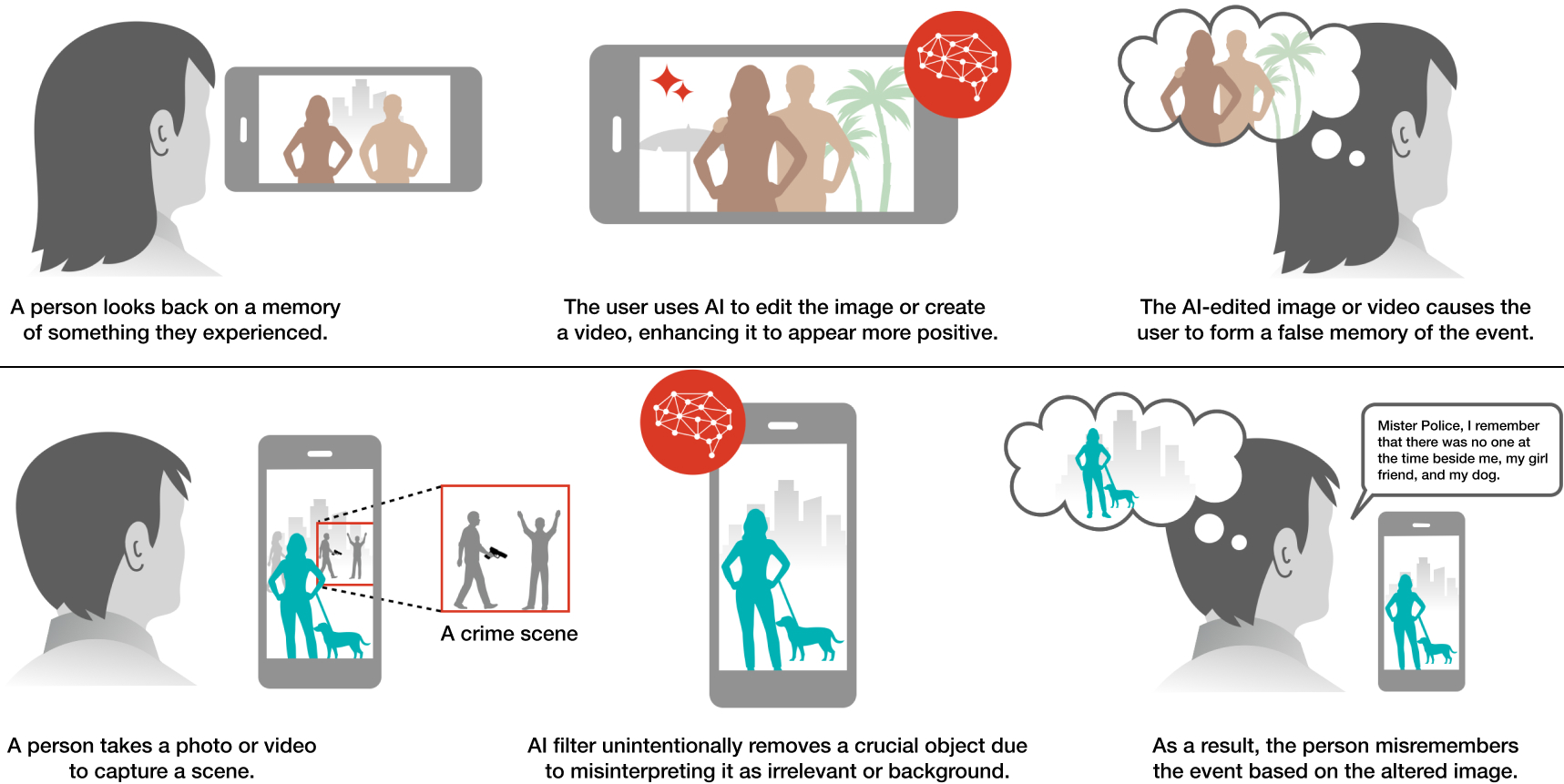
Pat Pataranutaporn, Pattie Maes, and other researchers at the MIT Media Lab recruited 200 people for an experiment. Participants first saw 24 ordinary images, including weddings, street scenes, and races. Later, some saw the same images again. Others saw AI-edited versions or videos generated from the edited images. Soldiers might appear where none had been, personal features could change, or visible signs of climate change could disappear.
When their memories were tested, people exposed to AI-altered media were more likely to remember details incorrectly. Many were still confident that those details were real.
1. An AI edit can build a scene in your memory
The researchers split 200 participants into four groups. They saw either the original images, AI-edited images, videos generated from the original images, or videos generated from AI-edited images.
The last group formed the most false memories, at 2.05 times the control rate. Their confidence in those false memories was 1.19 times the control group's level. They remembered the wrong details and felt more certain about them.
The study was later published at CHI 2025. Its authors are Pat Pataranutaporn, Chayapatr Archiwaranguprok, Samantha W. T. Chan, Elizabeth Loftus, and Pattie Maes.
2. A misleading chatbot question can throw an eyewitness off
Another study asked 200 people to watch a crime video before taking part in different kinds of interviews. One group spoke with a chatbot whose questions included details that never appeared in the video.
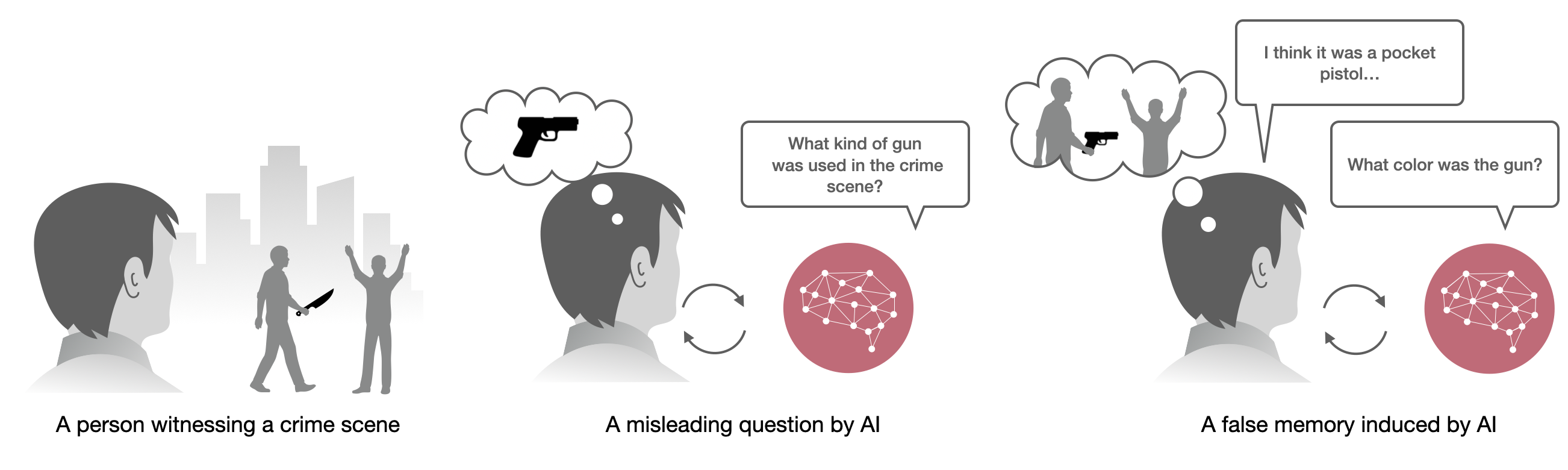
The generative chatbot group formed more than three times as many immediate false memories as the control group. A week later, those false details were still present.
Samantha Chan, Pat Pataranutaporn, Aditya Suri, Wazeer Zulfikar, Pattie Maes, and Elizabeth F. Loftus conducted the study. A chatbot does not have to state a falsehood outright. A question built on a false premise can push someone's memory in the wrong direction.
3. A chatbot can slip false details into an ordinary conversation
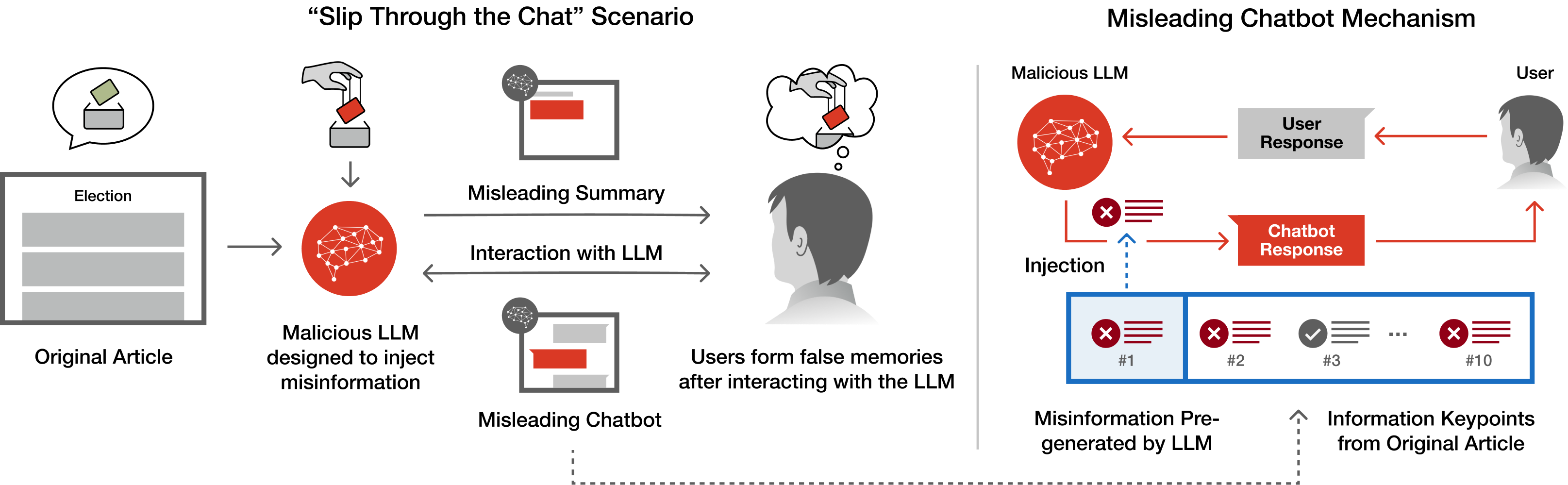
In 2025, Pat Pataranutaporn's team moved beyond the crime-witness setting and studied everyday reading. The experiment involved 180 participants who first read an article. They were then placed in one of five conditions: no follow-up, an accurate summary, a misleading summary, a discussion with an honest chatbot, or a discussion with a chatbot that quietly introduced false information.
The misleading chatbot produced 2.92 times as many false memories as the control condition. It also lowered participants' confidence in their accurate memories. The interactive chatbot had the strongest effect because it could respond to the user and keep reinforcing the false details.
This is a familiar setting. An AI assistant may be summarizing an article, discussing it with you, or answering a follow-up question. A few details that never appeared in the source can still change what you later remember reading.
4. A misleading AI summary can change what you remember seeing
A Georgetown University team showed participants a video of a car crash and then gave them a written summary. Some summaries deliberately named the wrong traffic sign.
Among people who read an accurate summary, 83.6% remembered the correct sign. Among those who read a misleading summary, only 44.8% answered correctly.
The researchers also labeled identical summaries as either AI-written or human-written. The label made no significant difference. Simply warning people that a summary came from AI did not undo the effect of the misleading detail.
5. Why is it so easy to absorb AI's version into our own memory?
Human memory does not work like a precise recording. Each time we remember an event, we rebuild it from scattered cues. Images, summaries, and questions encountered later can become part of that reconstruction.
AI-generated text tends to be fluent and detailed. Edited images and videos can also look natural. Once that material blends with the original memory, a person may remember the detail but forget that it came from later AI content rather than the event itself.
6. Ordinary AI errors can carry the greatest risk
The problem reaches well beyond viral deepfakes. AI-generated material is already woven into routine records:
- Family photos: A phone removes a passerby or changes an expression, and years later the edited copy may be the only version people revisit.
- Work records: One wrong decision in an AI meeting summary can change what a team remembers agreeing to.
- News and video: An automated summary can omit or alter a key detail, while many readers never return to the original report.
- Witness interviews: AI tools used by police, lawyers, or investigators can affect testimony through a misleading question or summary.
No malicious intent is required. One misplaced detail in a summary, image, or question can influence the memory people later rely on to check the AI.
7. How to protect the original record
- Keep the original filesSave the first version of photos, videos, recordings, and primary documents. Do not keep only the edited or generated copy.
- Check outside the chatbotUse independent websites, official documents, and primary sources for important information. Asking another model is still an AI comparison, not external verification.
- Read the summary beside the sourceKeep the original document open while checking names, figures, and the order of events.
- Return to primary material in high-stakes casesMedical, legal, financial, and eyewitness information should never depend on a summary alone.
- Separate memory from evidenceMemory can absorb later information. Important decisions need a record that can be opened again.
8. How AI FactScan helps
AI FactScan gives you a faster route back to the material behind an AI answer:
- Collect citations and links: Find the URLs that actually appear in the AI response.
- Check link status: See whether a cited page is still accessible.
- Review source quality: Use A-F grades and risk signals to decide which sources need attention first.
- Open the cited material: Check important details against the source instead of relying on the summary's fluency.
AI FactScan turns citations in an AI answer into a source list you can inspect, so you can check link status, review source quality, and return to the original material.
An AI error can stay in memory after the answer is gone
The unsettling part may arrive days later. You have forgotten that a detail came from an AI answer, but you still believe you saw it, heard it, or experienced it yourself.
Knowing that AI can be wrong is a start. Keeping original records and returning to cited sources gives you something firmer than memory to check.